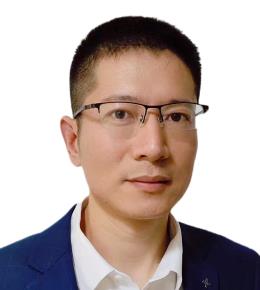
About
My group focuses on methodological advances in explainable and trustworthy artificial intelligence, with an emphasis on understanding, interpreting, and improving the internal mechanisms of modern deep learning systems and foundation models. Our research spans explainable AI, robust machine learning, mechanistic interpretability, causal reasoning, and AI security, with the goal of developing AI systems that are more transparent, reliable, and resilient to adversarial attacks. In parallel, we translate these methodological advances into high-impact applications, including medical imaging, smart agriculture, and scientific discovery, where explainability and trustworthiness are essential for supporting reliable human understanding and decision-making.
Research Interests
- Explainable AI: post-hoc explainability, and intrinsic explainable model design
- Trustworthy AI: robustness, security, safety
- Applications: explainable AI for healthcare, medical imaging, smart agriculture, and scientific discovery
News & Spotlight
- Sep 2026Our work, “Exploring Advertising Manipulation in Diffusion Image Generation,,” has been accepted to the The Fortieth Annual Conference on Neural Information Processing Systems (NeurIPS 2026)
- Aug 2026Our work, “Resection-Cavity-Aware Segmentation of Brain Metastases for BraTS 2026,” has been accepted to the BraTS-METS Challenge at the 29th International Conference on Medical Image Computing and Computer-Assisted Intervention (MICCAI 2026).
- Jul 2026Structured Multi-step Jailbreaking under a Hamiltonian Generative Formulation accepted to ICML 2026.
- Feb 2026Winsor-CAM accepted to IEEE Transactions on Pattern Analysis and Machine Intelligence (TPAMI).
- Jan 2026Received the South Dakota Board of Regents Competitive Research Grant Award in support of our research on trustworthy AI for precision agriculture.
- Jan 2026Expert-Guided Explainable Few-Shot Learning with Active Sample Selection for Medical Image Analysis accepted to the IEEE Journal of Biomedical and Health Informatics (JBHI).
- Aug 2025Received the Research Faculty Award, Department of Computer Science, University of South Dakota.
- Apr 2025Promoting Shape Bias in CNNs: Frequency-Based and Contrastive Regularization for Corruption Robustness received the Best Paper Award at ISPR 2025.
- Aug 2025Bridging Symmetry and Robustness: On the Role of Equivariance in Enhancing Adversarial Robustness selected for a NeurIPS 2025 Spotlight.
Openings
I am actively recruiting motivated Ph.D. students with a strong background in Deep learning, Trustworthy AI, or related fields. Interested candidates must be efficient in Programming and have a solid understanding of Machine Learning and Deep Learning concepts.
Prospective students should email me their CV, and a short statement of research interests. Please include "Prospective Student" in the subject line.